.avif)
Virginia’s Clean Slate Implementation Started This July: Here’s What You Need to Know


Approximately 1.4 million Virginians have an arrest or conviction record — most often for old arrests, acquittals, or low-level convictions. For years, only a very limited selection of non-conviction records were eligible for expungement, mostly in cases of acquittals or dismissals. That changed in July of 2026, with new changes rolling out today.
Virginia's Clean Slate Act, passed in 2021, is currently in its implementation era. On July 1, 2026, Virginians became able to access new pathways to record relief — marking the first time in the Commonwealth's history that people could seal conviction records. As of October 1, 2026, automated sealing has expanded to include additional conviction records — among them, petit larceny and concealment, disorderly conduct, certain trespass offenses, and misdemeanor possession of marijuana with intent to distribute. An estimated 415,000 Virginians stand to benefit from full or partial record sealing under this law.
Here is what you need to know about what's happening, when, and why it matters.
Why This Matters
Arrest and conviction records create lasting barriers to employment, housing, and education — without improving public safety. Studies find that average wages increase by approximately 23 percent within one year of record sealing, even after accounting for prior employment history and broader economic trends. When people can access stable work and housing, recidivism decreases and communities are stronger.
Even when people become eligible for record relief, the process has not always been accessible. Traditional petition-based systems require individuals to understand complex eligibility rules, gather court records, complete paperwork, and navigate the legal system — often without legal assistance. As a result, many people who qualify for relief never receive it.
Automation addresses this directly. By allowing eligible records to be sealed without requiring people to file paperwork, hire an attorney, or appear in court, Virginia's Clean Slate Act ensures that relief reaches everyone who has earned it — not only those with the time, money, or resources to navigate the process.
July 2026
Three major changes took effect on July 1, 2026:
- Petition-based record sealing began. Eligible Virginians can now petition to seal most misdemeanor convictions, deferred dismissals, and certain felony convictions. To be eligible, individuals must generally be conviction-free for 10 years for a felony and 7 years for a misdemeanor, and must not have been convicted of a new felony in the 10 years before filing. Class 1–4 felonies and other unclassified felonies are not eligible.
- Expungement requirements were updated. The petition process became more accessible by eliminating fingerprint requirements and filing fees. All filings in expungement cases are now kept under seal, and petitioners can access updated court forms directly on the Virginia Courts' website.
- Non-conviction automated sealing began. Misdemeanor non-conviction charges that are dismissed with prejudice or acquitted have been automatically sealed upon dismissal — no further action required from the individual. Felony non-conviction charges may also be eligible for automated sealing upon dismissal with prejudice or acquittal, if the individual requests sealing and the Commonwealth consents.
October 2026
As of October 1, 2026, automated sealing has expanded to include additional conviction records — among them, petit larceny and concealment, disorderly conduct, certain trespass offenses, and misdemeanor possession of marijuana with intent to distribute. Importantly, all marijuana possession records — convictions, deferred dismissals, and non-convictions — are now sealed automatically. Individuals must generally be conviction-free for 7 years for a misdemeanor to qualify, and no felony convictions are eligible for automated sealing at this stage.
December 2026
On December 1, 2026, additional updates to Virginia's expungement law take effect, further broadening who can petition for relief. "Otherwise dismissed" language is repealed, allowing more people who were arrested, charged, or indicted for eligible offenses to petition for expungement. Dismissed traffic infractions can also be expunged under these changes.
Public Safety Remains Central
Virginia's Clean Slate Act was designed with public safety safeguards built in. Records sealed through automated or petition-based processes will remain accessible to courts, prosecutors, and law enforcement for investigations, sentencing, and other public safety purposes when appropriate.
Research shows that individuals who qualify for record clearance after extended crime-free periods are no more likely to reoffend than those without records — and that increased access to employment and housing is associated with lower recidivism and stronger long-term community safety.
What Comes Next
Implementation is only the beginning. As Virginia moves forward, ensuring that eligible Virginians know the status of their record and understand what that means for their futures will be essential. A second chance only works if people know they have one.
The Clean Slate Initiative will continue to partner with stakeholders in Virginia to ensure the law delivers on its promise for the estimated 415,000 Virginians who stand to benefit.
.png)
New Resource Helps Pennsylvanians Understand Clean Slate and Check Their Records
A new Clean Slate Initiative resource helps Pennsylvanians understand which records may qualify for automated sealing, how waiting periods work, and how to check what appears on their public record.
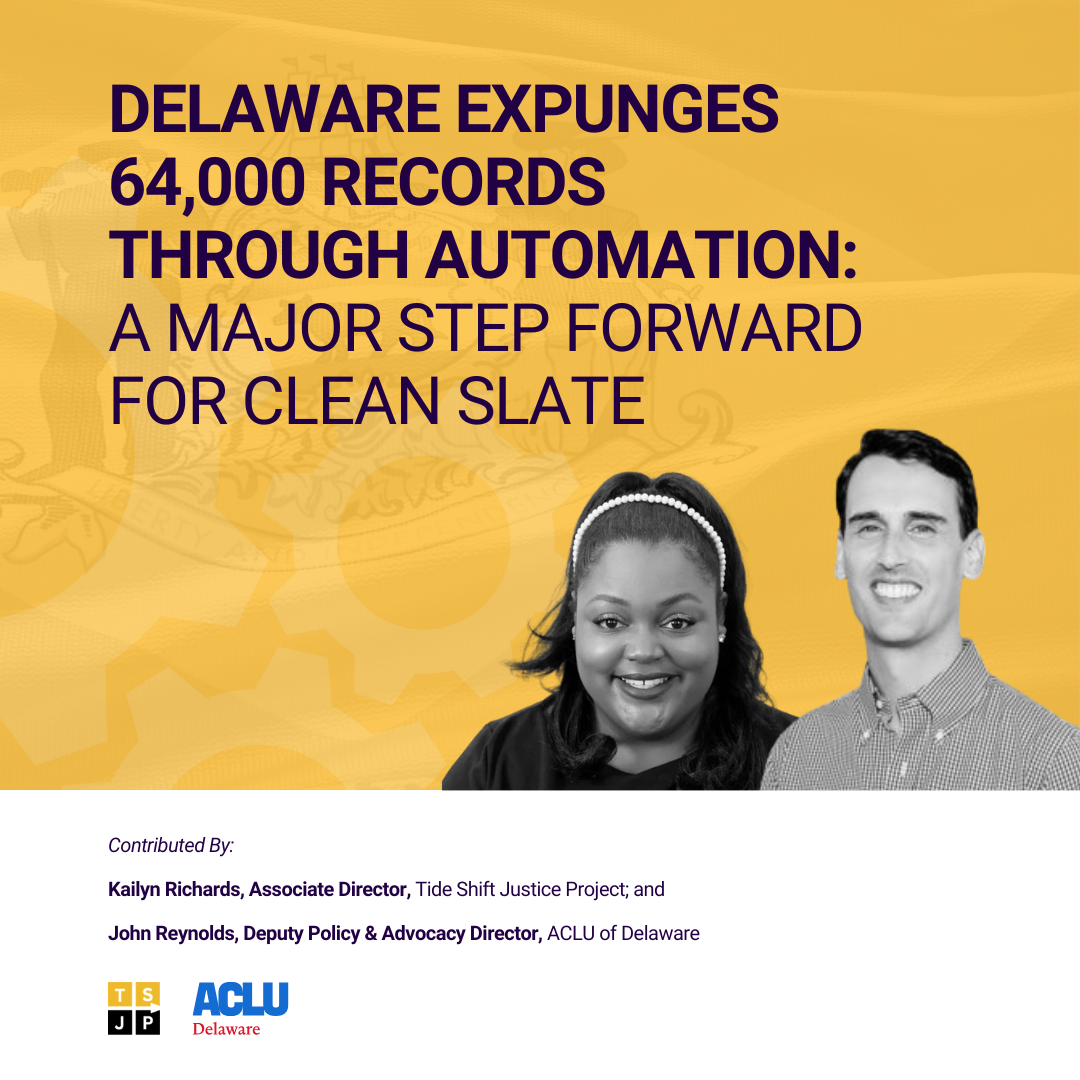
Delaware Expunges 64,000 Records Through Automation: A Major Step Forward for Clean Slate
Thousands of Delawareans have just received the second chance they were promised when the state passed its automated expungement law in 2021. Learn more in this guest contribution from Clean Slate Delaware partners, Kailyn Richards, Tide Shift Justice Project, and John Reynolds, ACLU of Delaware.
Oklahoma Takes a Major Step Forward on Clean Slate Implementation
In Oklahoma, technical and administrative challenges slowed progress of the state's original Clean Slate bill, leaving many people waiting for the relief they’ve earned. SB 2030, a legislative "fix," addresses those challenges head-on.
Virginia’s Clean Slate Implementation Started This July: Here’s What You Need to Know
Virginia's Clean Slate Act entered implementation on July 1, 2026. Learn what changed, who may be eligible for record sealing, and what comes next as the law rolls out across the Commonwealth.
New Research: The Economic Losses from Arrest & Conviction Records
A new research report by The Clean Slate Initiative finds that arrest and conviction records are associated with substantial and persistent losses in employment and earnings — even when a person was never convicted and even after more than a decade without further legal system contact.
New Resource Helps Pennsylvanians Understand Clean Slate and Check Their Records
A new Clean Slate Initiative resource helps Pennsylvanians understand which records may qualify for automated sealing, how waiting periods work, and how to check what appears on their public record.
