.avif)
Reflections from NOBLE’s 50th Annual Training Conference
.avif)

There is a difference between talking about public safety policy and sitting in a room with the people responsible for putting it into practice every day.
I recently had the opportunity to represent The Clean Slate Initiative at the National Organization of Black Law Enforcement Executives’ 50th Annual Training Conference in Dallas. I went into the conference wanting to listen and learn from law enforcement leaders from across the country, but also thinking intentionally about how we can strengthen partnerships around public safety and second chances.
That felt especially important at NOBLE.
For 50 years, the organization has worked to advance equity in the administration of justice and serve as the “conscience of law enforcement,” with a mission rooted in justice through action. This year’s conference theme, “Forged in Struggle, Empowered by Strength, Defining Our Future,” reflected both that history and the responsibility NOBLE sees for shaping what comes next.
For me, the week wasn’t simply about attending another conference. It was about being present in conversations that are shaping the future of public safety and understanding where our work at CSI fits within them.
Being in the Room Matters
In my role leading federal legislative advocacy for CSI, I spend a lot of time thinking about Congress: building bipartisan support, working with congressional offices, strengthening coalitions, identifying trusted validators, and ultimately figuring out what it will take to move policies like Clean Slate forward.
NOBLE was an important reminder that some of the most consequential conversations for that work happen far beyond Capitol Hill.
Throughout the conference, themes around leadership, trust, innovation, community, and partnership surfaced again and again. Those aren't abstract concepts for the law enforcement executives in the room. They are questions these leaders have to navigate every day.
NOBLE’s own work reflects that. Its members have invested in strengthening community trust, mentoring future leaders, advocating for sound public policy, and partnering with organizations working toward safer and more just communities.
One idea from NOBLE's leadership particularly resonated with me: listening is an act of leadership.
Over the past year, NOBLE convened listening sessions that brought together residents, public officials, community leaders, and law enforcement professionals for honest dialogue. Their conclusion was straightforward: effective public safety requires trust, legitimacy, transparency, and meaningful community partnership.
I kept coming back to that throughout my time in Dallas because the same principle applies to advocacy.
We cannot build effective policy if we are only talking to people who already agree with us. And we cannot build durable coalitions without first understanding how people with different responsibilities and experiences see the problem we are trying to solve.
Public Safety and Second Chances Are Not Opposing Ideas
That brings me to one of my biggest reflections from NOBLE.
Too often, our national policy conversations create a false choice between public safety and second chances. My time in Dallas reinforced for me that there is significant space where those priorities not only coexist, but can strengthen one another.
Clean Slate is about what happens after someone has served their sentence, completed the requirements placed before them, and remained crime-free. It asks a basic question: should an old record continue functioning as a lifetime barrier to employment, housing, education, and economic stability long after someone has fulfilled their obligations to the justice system?
For those of us working to advance federal Clean Slate legislation, answering that question requires a broad coalition.
That is where law enforcement leadership can play an important role.
When law enforcement executives are willing to engage in conversations about rehabilitation, reentry, record sealing, workforce participation, and second chances, it adds a perspective to the policy debate that members of Congress need to hear.
But there is an important distinction here.
The goal should not simply be to find law enforcement leaders willing to endorse something we have already decided.
The real opportunity is partnership.
It means bringing law enforcement leaders into the conversation earlier, listening to what they are seeing in their communities, understanding where they see opportunities or concerns, and finding the places where our priorities genuinely intersect.
That is part of what made my conversations at NOBLE valuable. I heard an openness from leaders about strengthening partnerships and communicating with organizations across the country working on issues connected to justice and public safety. For CSI, that creates an opportunity to continue building a relationship based not simply on a legislative ask, but on shared learning and collaboration.
Relationships Are Part of the Strategy
Federal advocacy can sometimes become overly focused on the final moments of a campaign: the endorsement, the congressional meeting, the bill introduction, the committee vote.
But those moments rarely appear out of nowhere.
Relationships are part of the infrastructure that makes them possible.
NOBLE brought together nearly every piece of that lesson in one place. I had opportunities to listen to law enforcement executives, learn more about the challenges facing their agencies and communities, and have conversations about the broader public safety landscape.
Those relationships matter because bipartisan legislation rarely moves because one organization makes the perfect argument.
It moves when policymakers hear a credible case from a coalition of voices they trust.
People directly impacted by the justice system bring an essential perspective. So do advocates, employers, workforce leaders, researchers, prosecutors, community organizations, and law enforcement executives. Each sees a different part of the same landscape.
Our job is not to pretend those perspectives will always be identical.
Our job is to build enough trust to sit at the same table, identify where our goals align, work through where they don't, and determine what progress can look like together.
That is coalition building, and it is particularly important for an issue like Clean Slate.
Fifty Years Behind, and a New Chapter Ahead
The conference also came at a significant moment for NOBLE itself.
During the gathering, Chief Mitchell Davis III was elected NOBLE’s 49th National President as the organization begins its next 50 years. Chief Davis brings more than 35 years of policing experience and has worked on criminal justice policy at the local, state, national, and international levels.
What particularly caught my attention were the priorities NOBLE identified for this next chapter: strengthening its national voice on public safety, expanding strategic partnerships, investing in leadership development, advancing equitable policing, supporting officer wellness, and helping shape conversations about the future of policing.
There is opportunity in that vision.
For CSI, continued engagement with NOBLE can be about more than asking law enforcement leaders to support Clean Slate legislation. It can be about developing an authentic relationship where we learn from one another, identify shared priorities, and explore where collaboration can strengthen both public safety and pathways to opportunity.
That kind of relationship takes time.
And that is precisely why showing up matters.
What I’m Bringing Back to CSI
I left Dallas thinking about what it means to build a broader table around Clean Slate.
It means continuing to make sure law enforcement leaders are part of our conversations.
It means listening across perspectives, especially when those perspectives challenge us to think differently.
It means recognizing that coalition building cannot begin when we suddenly need someone’s support. The relationships have to come first.
And it means being willing to enter conversations not just prepared to explain what CSI believes, but prepared to listen to what others have learned from doing this work on the ground.
That may be my biggest takeaway from NOBLE.
Sometimes the most important outcome of a conference isn't a new policy idea or another business card.
It's finding people with whom you can continue the conversation.
NOBLE’s 50th Annual Training Conference was both a celebration of five decades of leadership and what the organization itself described as a call to action for the future of public safety. That future, NOBLE argues, will require courageous leadership, innovation, collaboration, and service.
I’m grateful I had the opportunity to represent The Clean Slate Initiative in Dallas and, more importantly, to listen, learn, and continue building relationships with leaders whose voices belong in the conversations shaping public safety policy.
Because creating safer communities and creating meaningful pathways to second chances are not competing goals.
Our strongest policies should help us do both.
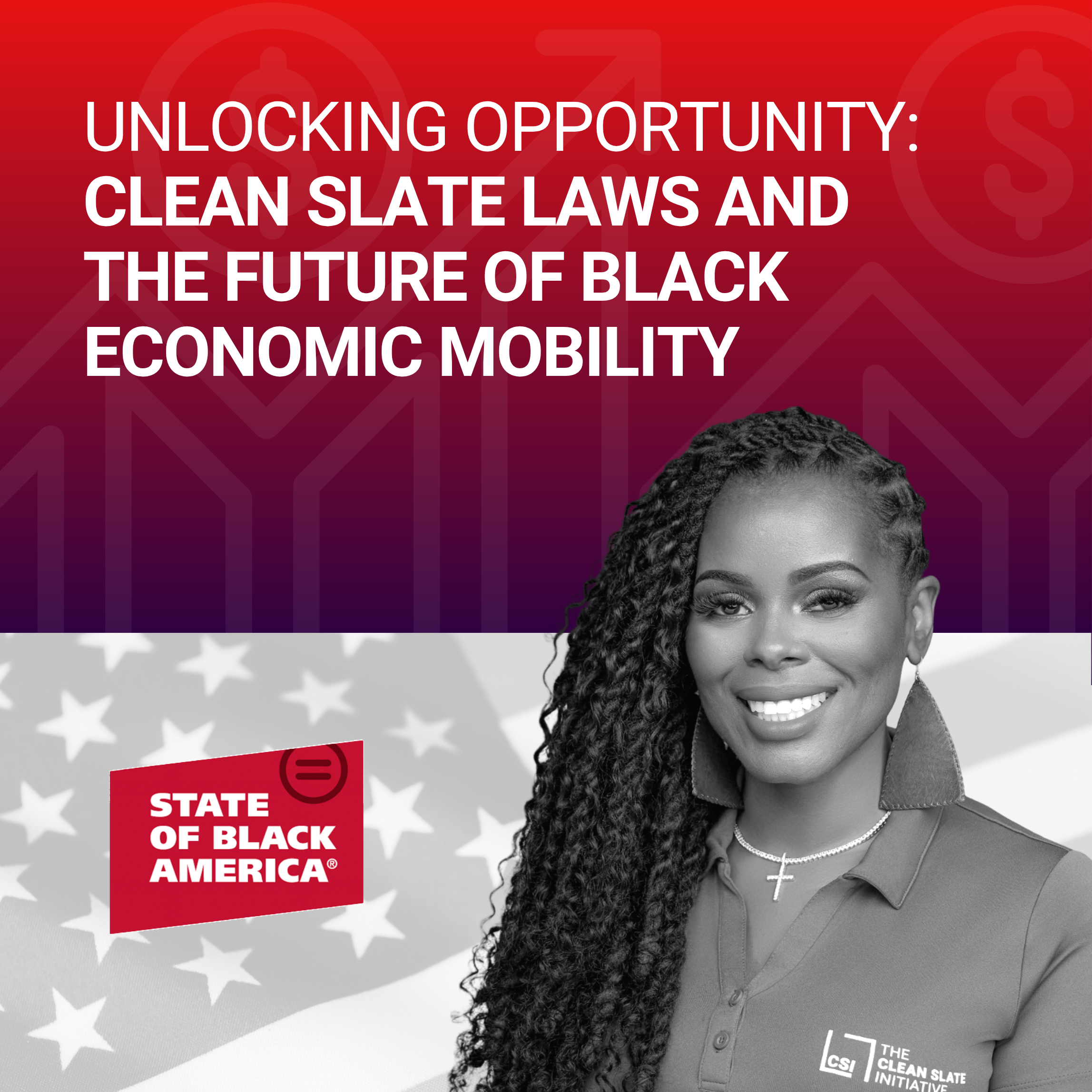
Unlocking Opportunity: Clean Slate Laws and the Future of Black Economic Mobility
Originally published in the 2026 State of Black America®, this essay by our CEO explores how arrest and conviction records limit economic opportunity for Black Americans—and how Clean Slate can help expand access to second chances.
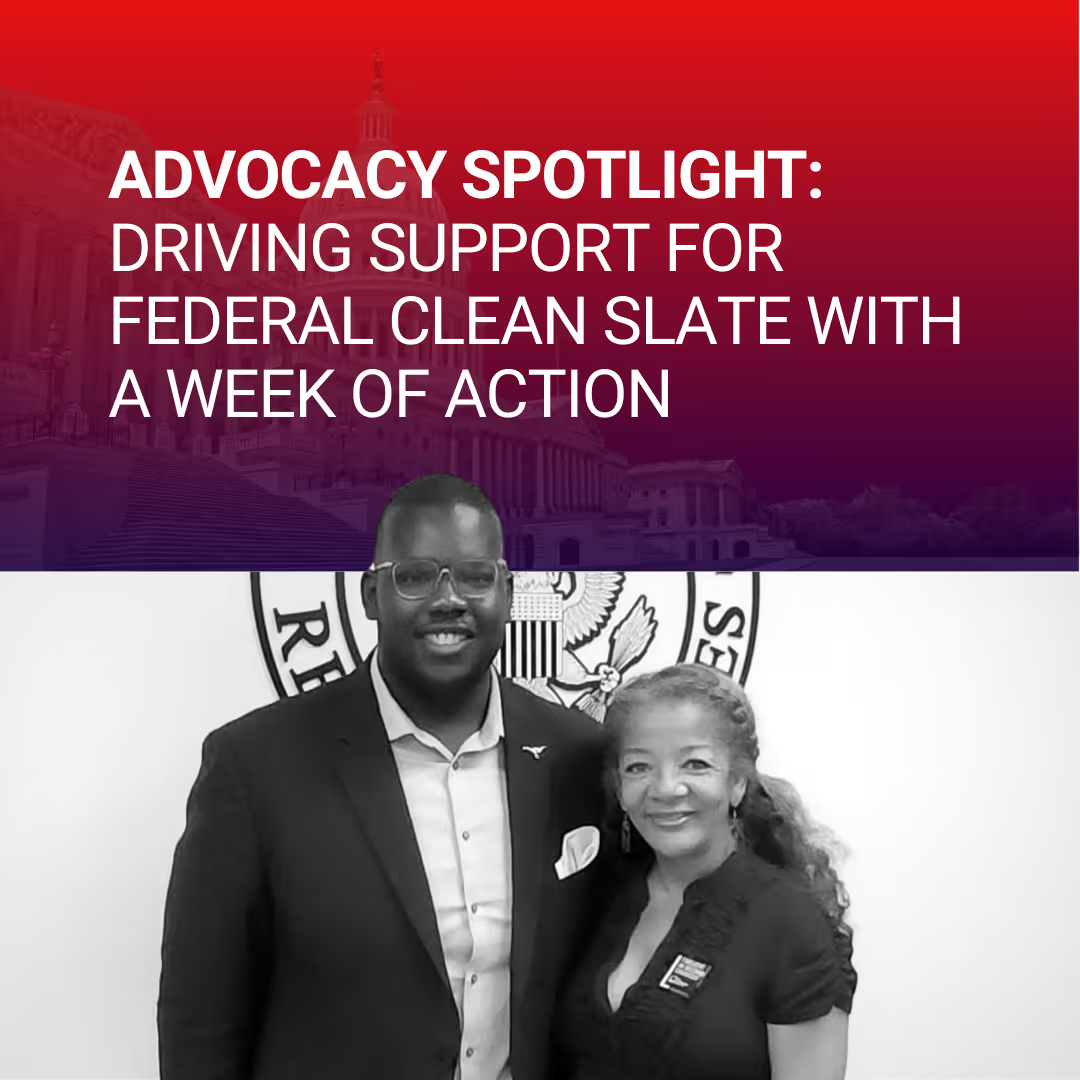
Advocacy Spotlight: Driving Support for Federal Clean Slate with a Week of Action
The Clean Slate Initiative's first-ever Clean Slate Week of Action elevated our federal priorities and demonstrated the profound power of federal Clean Slate support. Learn more in this update from Reginald Darby, Federal Legislative Director.
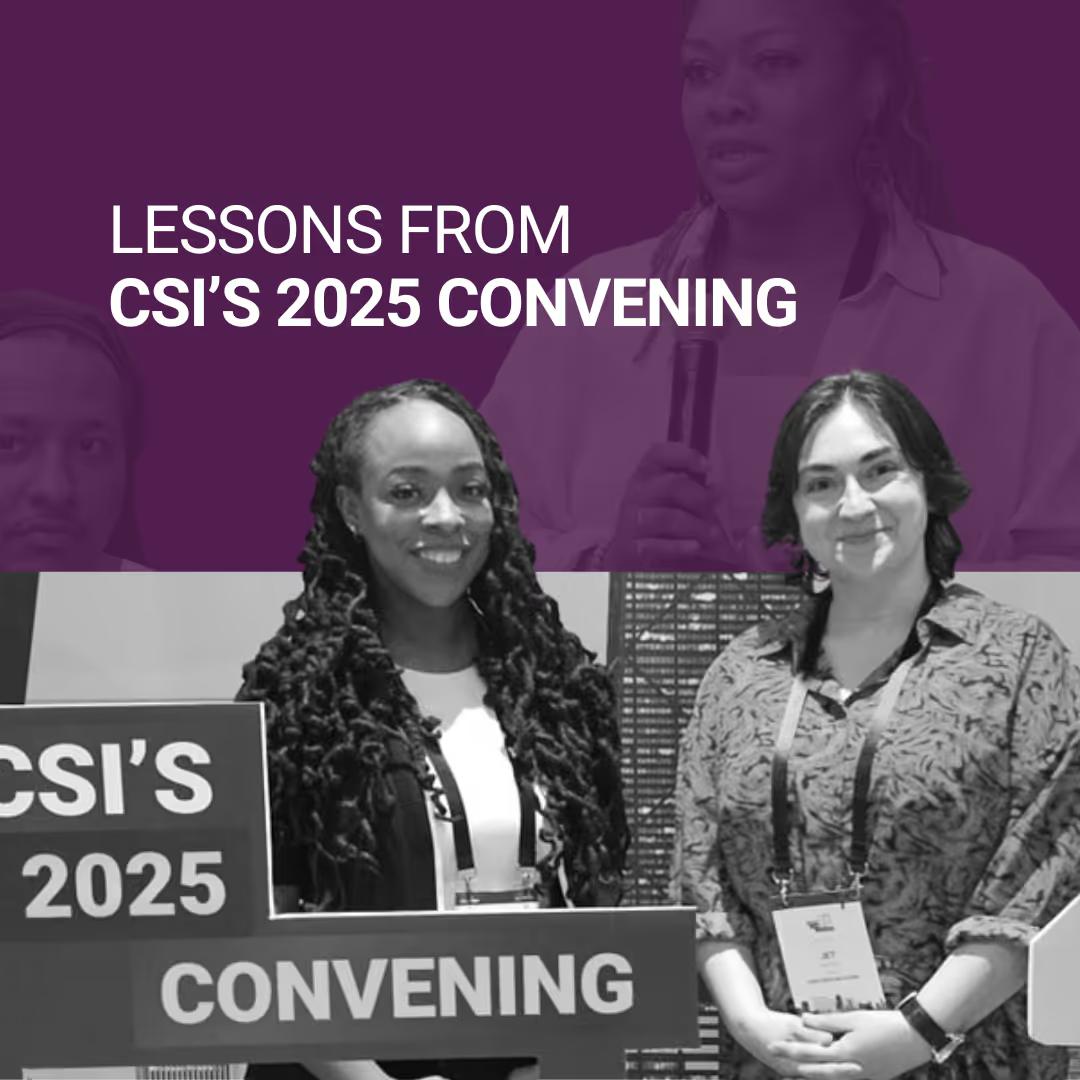
Lessons from CSI’s 2025 Convening
Jerika White, Community Justice Manager at Empower Missouri, joined CSI's 2025 convening in Chicago in June as a first-time attendee. Learn more about her experience at the event in this guest update.
Virginia’s Clean Slate Implementation Started This July: Here’s What You Need to Know
Virginia's Clean Slate Act entered implementation on July 1, 2026. Learn what changed, who may be eligible for record sealing, and what comes next as the law rolls out across the Commonwealth.
New Research: The Economic Losses from Arrest & Conviction Records
A new research report by The Clean Slate Initiative finds that arrest and conviction records are associated with substantial and persistent losses in employment and earnings — even when a person was never convicted and even after more than a decade without further legal system contact.
.png)
New Resource Helps Pennsylvanians Understand Clean Slate and Check Their Records
A new Clean Slate Initiative resource helps Pennsylvanians understand which records may qualify for automated sealing, how waiting periods work, and how to check what appears on their public record.
