.avif)
The Show-Me State Showed Us How It’s Done: Missouri Wins the Race to 14!
.avif)

On Thursday, July 11, 2026, Governor Mike Kehoe signed Missouri’s Clean Slate legislation into law, making Missouri the 14th state in the nation — plus Washington, D.C. — to pass an automated record sealing law.
🏁 That means Missouri has officially won the Race to 14. 🏁
It’s a milestone worth celebrating not only because of what it represents nationally, but because of what it will mean for Missourians who will now have a real chance to move forward with their lives.
For years, too many people in Missouri have remained stuck with records that continue to follow them long after they’ve completed their sentence and stayed out of trouble. Even when people were legally eligible to seal their records, the process often required navigating complicated paperwork, paying costly fees, and finding legal help many simply could not afford. Clean Slate changes that.
Under the new law, eligible drug possession and drug paraphernalia records will be sealed through an automated process after a period of time for people who meet the requirements. Instead of forcing people to petition the court on their own, the state will now take responsibility for making record sealing accessible.
A Bipartisan Victory Years in the Making
Missouri’s victory did not happen overnight. This moment is the result of years of organizing, advocacy, education, coalition-building, and persistence from directly impacted people, community leaders, lawmakers, and advocacy organizations across the state.
The Clean Slate Initiative is especially proud to have worked alongside partners like Empower Missouri, Responsible Business Initiative for Justice, Unify.US, and other stakeholders. We are grateful for the unwavering support of Sen. Nick Schroer, Sen. Brian Williams, and Rep. Bishop Davidson, who championed this policy through the legislative process.
Together, we made the case for a policy rooted in accountability, fairness, and practicality: if someone has completed their sentence and remained crime-free, old records should not continue creating barriers to employment, housing, education, and economic opportunity forever. That message resonated across party lines.
Clean Slate continues to prove that second chances are not a partisan issue. Across the country, lawmakers from both sides of the aisle are embracing automated record sealing because it strengthens workforces, supports families, reduces barriers to economic mobility, and helps communities thrive.
What Missouri’s Law Does
Missouri’s new law creates an automated process to seal certain qualifying drug possession and drug paraphernalia convictions without requiring people to go through the courts themselves. Under SB 1421:
- Eligible misdemeanor records may be sealed one year after final disposition;
- Eligible felony records may be sealed after three years of remaining crime-free; and
- People must complete all court-ordered requirements and remain free of pending charges during the waiting period.
Importantly, sealed records will no longer appear on most public background checks used for employment, housing, and other opportunities, while law enforcement and other authorized entities will still retain access where permitted by law.
The law also establishes a January 2027 implementation deadline and creates a Missouri Expungement Fund to support the technology and infrastructure needed to make automatic sealing a reality.
Why This Matters
37 percent of adults in Missouri have some kind of arrest or conviction record.
For many, those records stem from old arrests, dismissed charges, or low-level offenses from years ago. But even decades later, a record can still shut people out of jobs, housing, schools, and stability.
Clean Slate Continues its Momentum
With Missouri joining the map, the Clean Slate movement continues to build momentum nationwide. With Missouri’s winning lap in the Race to 14, more than 18 million people are now on a path to full or partial record sealing in the 14 states, and Washington D.C., that have passed Clean Slate laws.
Today, Missouri proved once again that second chances matter — and that when advocates, lawmakers, and communities come together, meaningful bipartisan change is possible.
Missouri won the Race to 14. Now, onward to 15.
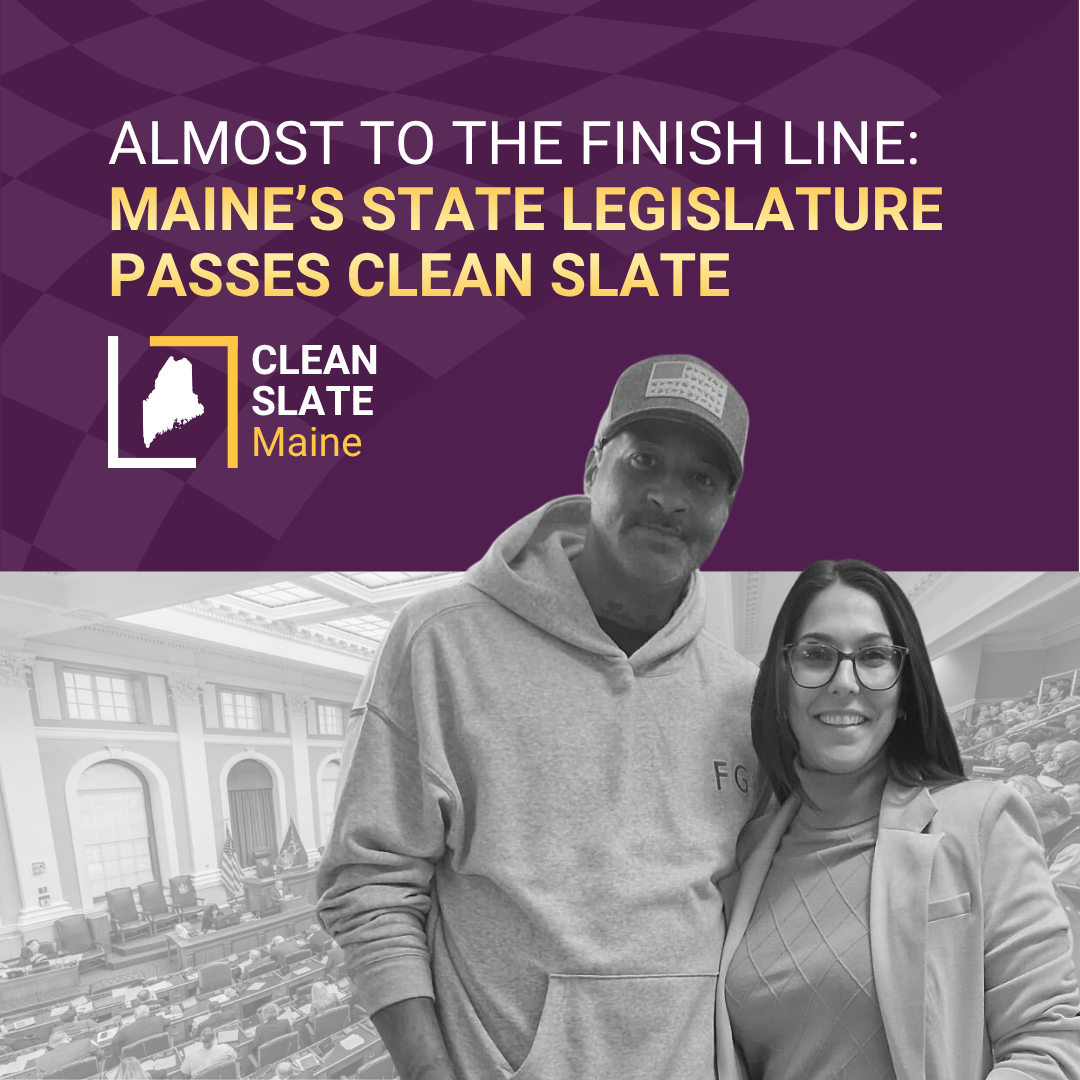
Almost to the Finish Line: Maine’s State Legislature Passes Clean Slate
We're almost to the finish line in the race to the 14th Clean Slate state. Maine's State Legislature has passed LD 1911, and the bill now heads to the Governor's desk.
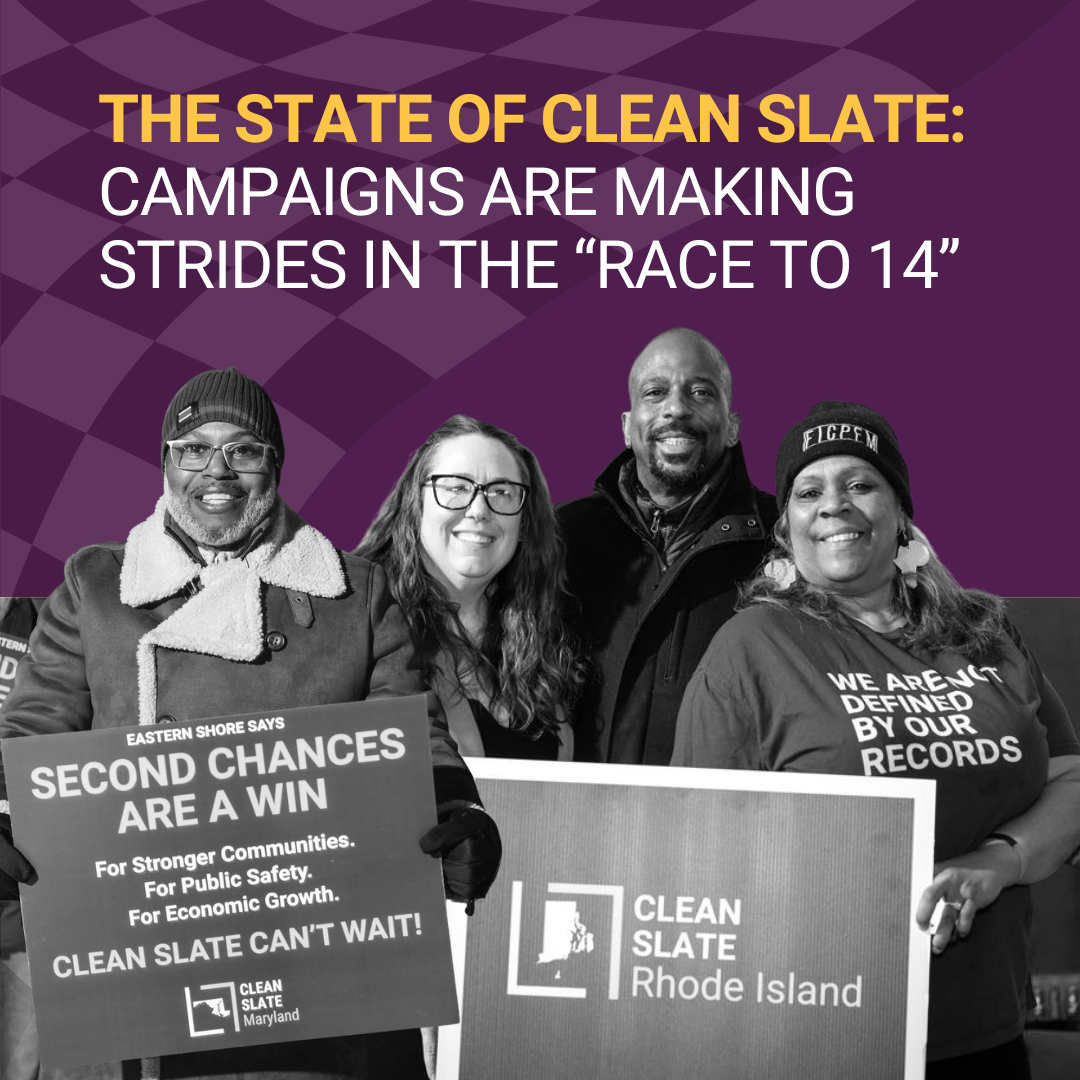
The State of Clean Slate: Campaigns are Making Strides in the “Race to 14”
Across the country, a friendly competition is underway: Clean Slate partners across several states are working to become the 14th state (plus Washington D.C.) to pass an automated record sealing law. Learn more about the "Race to 14" in this update from Erik Altieri, Director of Campaigns.
Clean Slate Campaign Launches in Rhode Island
Rhode Island has launched their Clean Slate campaign and introduced legislation to automate record sealing and expand access to second chances. Learn more in this update from Mo George, Campaign Strategist.
Virginia’s Clean Slate Implementation Started This July: Here’s What You Need to Know
Virginia's Clean Slate Act entered implementation on July 1, 2026. Learn what changed, who may be eligible for record sealing, and what comes next as the law rolls out across the Commonwealth.
New Research: The Economic Losses from Arrest & Conviction Records
A new research report by The Clean Slate Initiative finds that arrest and conviction records are associated with substantial and persistent losses in employment and earnings — even when a person was never convicted and even after more than a decade without further legal system contact.
.png)
New Resource Helps Pennsylvanians Understand Clean Slate and Check Their Records
A new Clean Slate Initiative resource helps Pennsylvanians understand which records may qualify for automated sealing, how waiting periods work, and how to check what appears on their public record.
