
Clean Slate Hawaiʻi Launches Campaign to Advance Record-Shielding Legislation in 2027


On Tuesday, November 17, 2026, Clean Slate Hawaiʻi marked the launch of its Hawaiʻi campaign with a press conference at The Arc of Hilo. The gathering brings together Directly Impacted individuals, community organizations, advocates, employers, and policymakers to build momentum for comprehensive Clean Slate legislation in 2027.
At the heart of this campaign is a simple but important question: Why should someone's past continue to close doors long after they have worked to rebuild their life?
Behind Every Call for Reform is a Person Whose Life Reveals Why Change is Necessary
The smiles and handshakes came first. Then came the background check.
For Clint Lefcourt, finding employment has meant repeatedly confronting the distance between being offered an opportunity and actually being allowed to take it.
“I've tried to get employment several times, only to get hired, sign papers, and then, every time my background check came back, it went from smiles and handshakes to, 'sorry, it's not gonna happen.'”
Clint has worked hard to change his life. Since 2023, he has been rebuilding, pursuing meaningful employment, and working toward a future he can feel proud of. Yet his record continues to follow him into job interviews and opportunities that might otherwise allow him to move forward.
He wanted to become a counselor for young people, using his experiences to help others navigate difficult circumstances. But that door closed, too.
His story raises an important question: What does it mean to ask people to rebuild their lives while continuing to deny them opportunities to do so?
The Lasting Impact of an Arrest or Conviction Record
Approximately one in four adults in Hawaiʻi, or roughly 315,000 people, has an arrest or conviction record.
For many, the consequences extend far beyond the conclusion of a criminal case or sentence. Records can continue to limit access to employment, housing, education, professional licensing, and other opportunities essential to achieving stability.
These consequences reach beyond individuals. When someone cannot secure a job, paying rent becomes harder. Without stable housing, maintaining employment, accessing treatment, attending appointments, and caring for family can become more difficult. One obstacle compounds another.
Clint's experiences show how people can do everything society asks of them, like seek employment and housing, take responsibility, and work toward a better future, while still facing barriers to the basic needs of life that determination alone cannot overcome. That’s a tall order.
The economic consequences are also significant. According to estimates from The Clean Slate Initiative, arrest and conviction records are associated with approximately $2.2 billion in lost annual earnings in Hawaiʻi.
Too many lose income and the opportunity to pursue careers and other opportunities. Families lose stability. Employers lose access to talent. Communities lose economic opportunities.
In Hawaiʻi, where the cost of housing already places enormous pressure on working families, these additional barriers can make an already difficult situation even more challenging.
What Would a Clean Slate Law Do?
Hawaiʻi's current record-relief process is restrictive and largely petition-based.
Even when someone qualifies for relief, accessing it may require navigating legal requirements, paperwork, fees, and a process that can be difficult to understand without assistance.
Clean Slate Hawaiʻi is advocating for two important reforms:
First, expand eligibility. More people who meet established legal requirements should have a meaningful pathway to record relief.
Second, establish a government-initiated process supported by technology. Rather than requiring every eligible individual to navigate the system independently, a technology-enabled process, with human oversight, would identify eligible records for shielding.
Shielding would limit public access to eligible records, including through many employment, housing, and educational background checks, without erasing the underlying records. Law enforcement and courts would retain access.
The goal is to remove unnecessary barriers that can continue long after someone has fulfilled their legal obligations.
For someone like Clint, this could mean the opportunity to compete for employment based on his qualifications, experience, and potential rather than being continually judged by his past. Moreover, with greater stability, he has the space to dream.
But Clean Slate is not a solution to every challenge.
It does not create affordable housing, guarantee employment, or replace the need for treatment, education, and workforce development.
What it can do is help remove a record-based barrier that makes accessing those opportunities more difficult.
Coming Home Is More Than Leaving Prison
We often talk about successful reentry as though it depends entirely on individual choices.
Find a job. Secure housing. Stay out of trouble. Rebuild family relationships. Become financially independent. These are reasonable aspirations, but achieving them requires more than personal determination.
People need opportunities, relationships, resources, and communities that support their efforts. We need to build for our needs if we want to see thriving communities.
For Clint, the desire to work with young people reflects something that is too often overlooked: individuals who have experienced incarceration also possess knowledge, skills, and perspectives that can benefit their communities.
Their experiences can inform mentorship, prevention, education, and the development of more effective solutions.
When we deny people opportunities to contribute, we lose more than their economic productivity. We also lose the leadership, knowledge, and care they could bring to others.
Across Hawaiʻi, community organizations are already helping people rebuild their lives through housing assistance, employment preparation, mentorship, recovery support, education, and family services.
These organizations understand that stability is built through relationships and access to resources. Yet their efforts can be undermined when an old record continues to close doors.
A person can change. A record can remain. Our policies should recognize the difference.
Building a Coalition Shaped by Community
Clean Slate Hawaiʻi is building a coalition of Directly Impacted individuals, families, community organizations, businesses, employers, advocates, people of faith and other stakeholders committed to advancing record-shielding legislation.
Our work extends beyond supporting a legislative proposal. We are building relationships, creating opportunities for community participation, and working to ensure that people most affected by record barriers have a meaningful role in shaping the campaign.
Through our Community Impact Committee and broader coalition, we want lived experience to inform not only the stories we tell, but also our priorities, organizing strategies, and legislative advocacy.
People who have navigated incarceration, reentry, and record-related barriers understand challenges that may not be visible in statistics or policy reports.
Their perspectives can help us identify what is working, what is missing, and what needs to change.
This means recognizing Directly Impacted individuals not simply as people who need assistance, but as mentors, organizers, advocates, and leaders whose expertise is essential to building more responsive policies and stronger communities.
The Path to 2027
In 2024, the Hawaiʻi Legislature established the Clean Slate Expungement Task Force to develop recommendations for a government-initiated record-shielding program.
Building on these efforts, Clean Slate Hawaiʻi is preparing to advance comprehensive legislation during the 2027 legislative session.
We're continuing to build support through organizational endorsements, individual petitions, community engagement, and opportunities for residents to participate in the legislative process.
Clint's experience reminds us that the question is not simply whether someone has changed their life. It is also whether our communities and institutions are willing to recognize that change.
When someone has worked to rebuild their life, we should ask what would help them continue moving forward—not what barriers we can justify keeping in their way.
Because coming home should mean more than leaving prison.
It should mean having a genuine opportunity to work, care for family, contribute to community, and build a future that is not permanently defined by the past.
Join the Clean Slate Hawaiʻi Coalition
We invite individuals, organizations, employers, and community members to join our coalition, share their experiences and expertise, and help shape this work.
Our next virtual coalition meeting is Wednesday, December 2, from 6 to 7 PM.
Visit cleanslatehawaii.org to learn more and get involved.
The Show-Me State Showed Us How It’s Done: Missouri Wins the Race to 14!
Missouri is now the 14th state to pass a Clean Slate law. Learn how the state's new automated record sealing law expands opportunity, reduces barriers, and marks another milestone for the growing Clean Slate movement.
Almost to the Finish Line: Maine’s State Legislature Passes Clean Slate
We're almost to the finish line in the race to the 14th Clean Slate state. Maine's State Legislature has passed LD 1911, and the bill now heads to the Governor's desk.
The State of Clean Slate: Campaigns are Making Strides in the “Race to 14”
Across the country, a friendly competition is underway: Clean Slate partners across several states are working to become the 14th state (plus Washington D.C.) to pass an automated record sealing law. Learn more about the "Race to 14" in this update from Erik Altieri, Director of Campaigns.
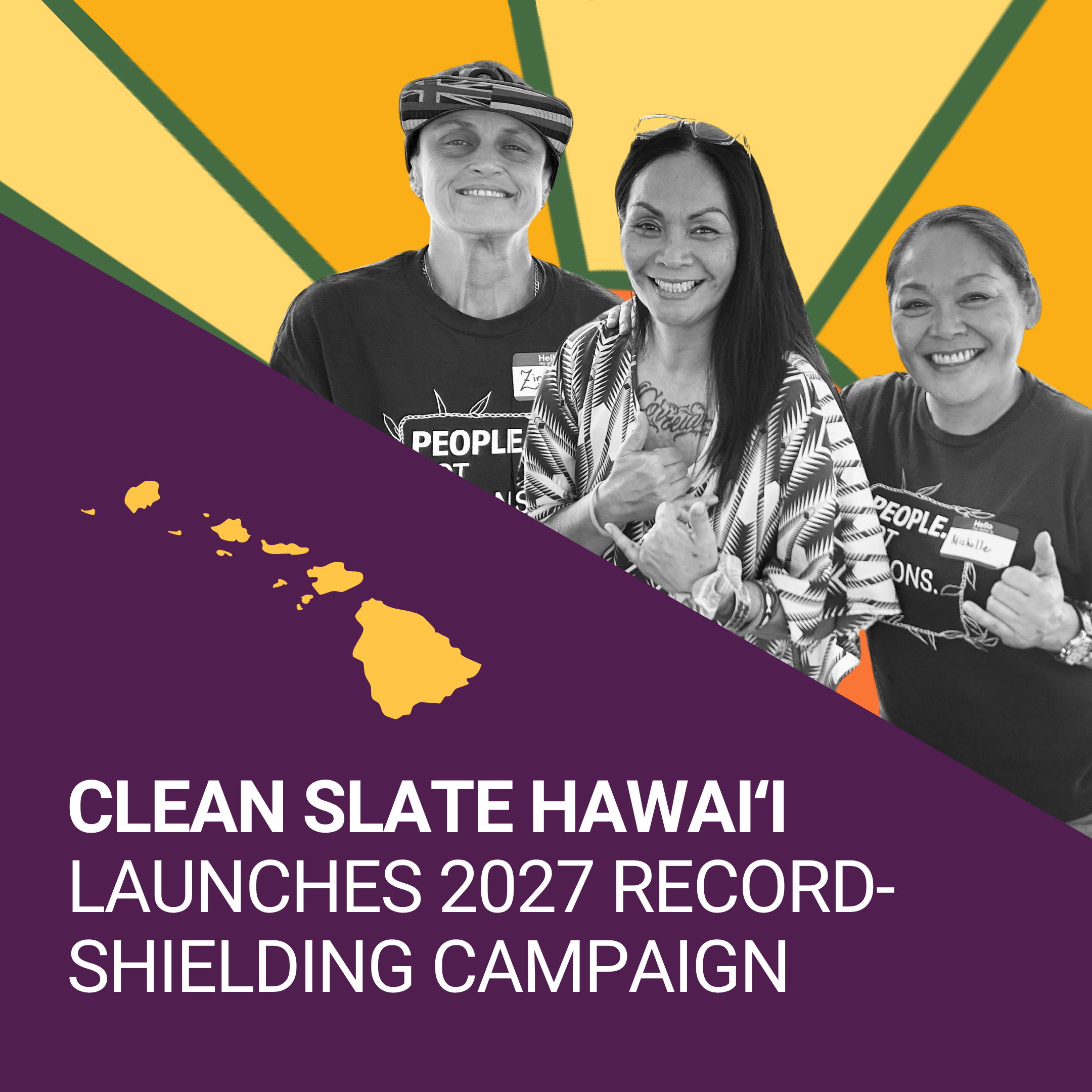
Clean Slate Hawaiʻi Launches Campaign to Advance Record-Shielding Legislation in 2027
Clean Slate Hawaiʻi has launched a campaign to advance record-shielding legislation in 2027. With approximately 315,000 Hawaiʻi residents impacted by arrest or conviction records, the coalition is advocating for expanded eligibility and a government-initiated record-shielding process to reduce barriers to employment, housing, and education. Learn how Directly Impacted leaders and community partners are working to expand access to second chances across Hawaiʻi.
Why CSI Supports Federal Policies That Strengthen Second Chances
Automated record sealing can help remove barriers to opportunity, but people with past arrest or conviction records often face additional challenges. CSI Federal Affairs Director Reginald Darby explores why The Clean Slate Initiative supports the Workforce Reentry Act, continued Second Chance Act funding, and the Safer Supervision Act, and how these federal policies complement Clean Slate efforts.
Virginia’s Clean Slate Implementation Started This July: Here’s What You Need to Know
Virginia's Clean Slate Act entered implementation on July 1, 2026. Learn what changed, who may be eligible for record sealing, and what comes next as the law rolls out across the Commonwealth.
