.avif)
Almost to the Finish Line: Maine’s State Legislature Passes Clean Slate
.avif)

Today, Maine took the lead in the With strong legislative support and the persistence of Maine’s advocacy community behind it, LD 1911 now heads to the governor’s desk.
With Governor Mills’ signature, Maine will officially become the 14th Clean Slate state, making real second chances a possibility for up to 123,000 adults with a record in the state.
Why Does Maine Need Clean Slate?
One in four adults in Maine — roughly 300,000 people — has an arrest or conviction record. Many of those records stem from old convictions, or even cases where the person was never convicted.
These records continue to create barriers to employment, housing, and education for years after someone has accepted accountability, paid their dues, and remained crime-free. LD 1911 changes that.
Up to 46% of the adults in Maine who have an old arrest or conviction record could become eligible for full record sealing under the Clean Slate bill. That’s real second chances. Real open doors. Real opportunities to move forward.
What LD 1911 Does
LD 1911 is designed to streamline Maine’s record sealing system by automating determinations about which records are eligible for sealing, and which ones are not, and expanding the number of offenses eligible for sealing. This ensures eligible records are sealed consistently, for people who have earned their second chance, rather than relying on a petition system accessible only to those with the money and time to pursue it.
There’s a waiting period before any record can become eligible:
- Misdemeanor convictions become eligible after a 5-year conviction-free period.
- Non-convictions (like dismissals and acquittals) become eligible after six months.
Serious and recent offenses are excluded by statute, ensuring that relief is reserved for people who have demonstrated long-term rehabilitation.
A Win for Public Safety, Families, and the Economy
Clean Slate policies work. By expanding access to jobs and housing, they strengthen families and local economies, and by automating the process, they cut red tape and make government systems more efficient.
Public safety is central to Clean Slate’s design, too. Once eligible records are sealed, they are removed from public background check searches to maintain consistency with current Maine law. However, sealed records remain accessible to courts, prosecutors, and law enforcement for investigations, sentencing, and other public safety purposes when appropriate.
Research shows that individuals who qualify for record sealing after extended crime-free periods are no more likely to reoffend than those without records, while increased access to employment and housing is associated with lower recidivism and stronger long-term community safety.
Powered by a Strong Coalition
This victory wouldn’t be possible without the leadership and dedication of advocates and partners who worked on this bill. Together, we built a campaign rooted in dignity, opportunity, and second chances:
- Maine Recovery Action Project (ME-RAP);
- Maine Prisoner Advocacy Coalition;
- Reentry Sisters;
- Maine Center for Economic Policy (MCEP);
- Responsible Business Initiative for Justice (RBIJ);
- And more.
The bipartisan support for the bill was the result of extensive study, diligent conversations, and ultimately a truly comprehensive measure that took into account the concerns of a wide array of stakeholders, all led by the hands-on efforts of bill sponsor Senator Rachel Talbot Ross.
The Race Continues
To date, 13 states, and Washington D.C., have Clean Slate laws on the books, and partners and stakeholders in those states are working toward making the promise of Clean Slate a reality through implementation.
Several other states have active legislation moving this year as they race to become the next Clean Slate state.
In states that don’t have active legislation, big moves are still being made. Coalition-building, public education, and people power are all important to this work, too — those are the kind of groundwork efforts that make legislative campaigns successful once a bill is introduced.
Maine took the lead today, but they accomplished something else, too: this win helps move the entire country forward on Clean Slate. And with the governor’s signature, Maine will cross the finish line in the Race to 14.
The Show-Me State Showed Us How It’s Done: Missouri Wins the Race to 14!
Missouri is now the 14th state to pass a Clean Slate law. Learn how the state's new automated record sealing law expands opportunity, reduces barriers, and marks another milestone for the growing Clean Slate movement.
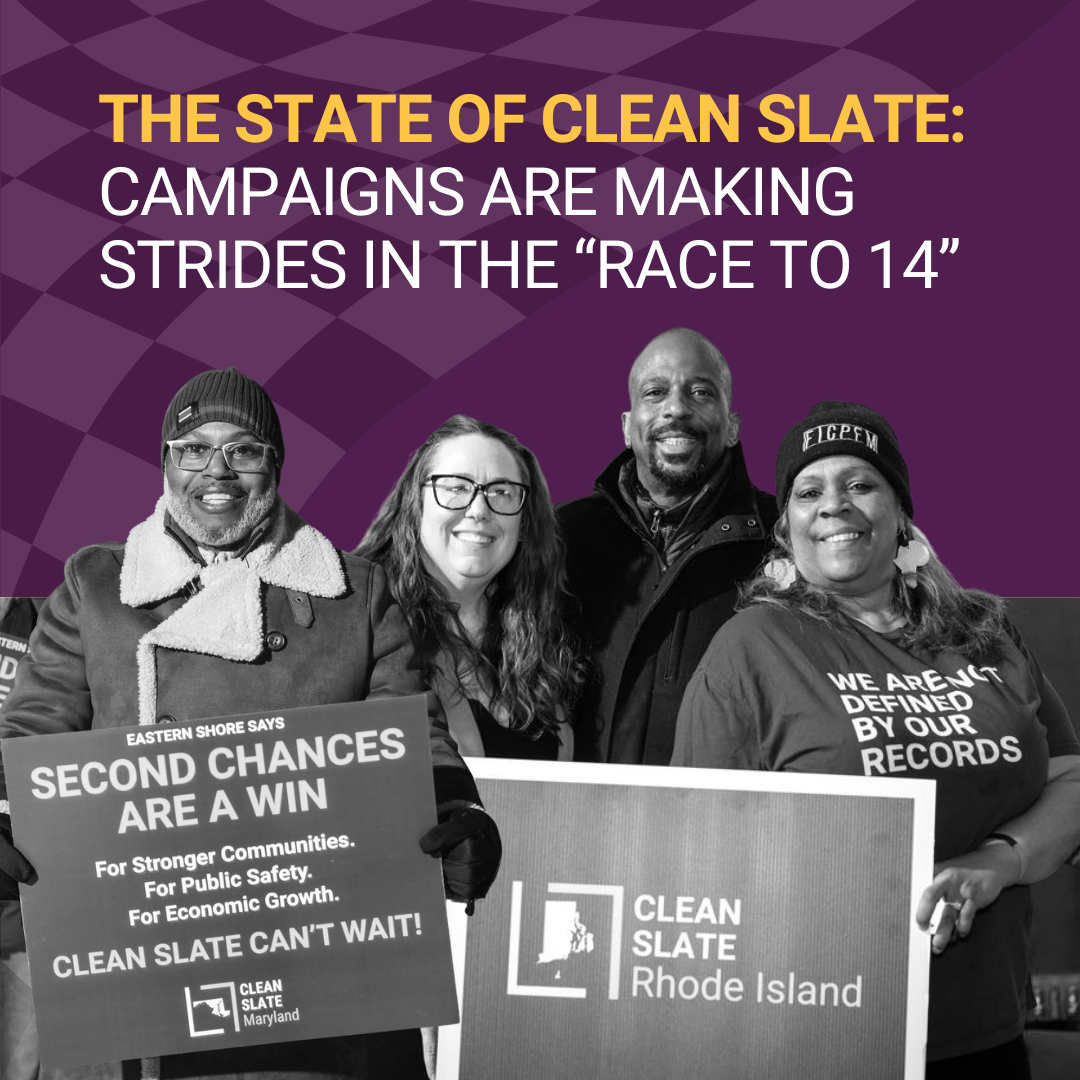
The State of Clean Slate: Campaigns are Making Strides in the “Race to 14”
Across the country, a friendly competition is underway: Clean Slate partners across several states are working to become the 14th state (plus Washington D.C.) to pass an automated record sealing law. Learn more about the "Race to 14" in this update from Erik Altieri, Director of Campaigns.
Clean Slate Campaign Launches in Rhode Island
Rhode Island has launched their Clean Slate campaign and introduced legislation to automate record sealing and expand access to second chances. Learn more in this update from Mo George, Campaign Strategist.
Virginia’s Clean Slate Implementation Started This July: Here’s What You Need to Know
Virginia's Clean Slate Act entered implementation on July 1, 2026. Learn what changed, who may be eligible for record sealing, and what comes next as the law rolls out across the Commonwealth.
New Research: The Economic Losses from Arrest & Conviction Records
A new research report by The Clean Slate Initiative finds that arrest and conviction records are associated with substantial and persistent losses in employment and earnings — even when a person was never convicted and even after more than a decade without further legal system contact.
.png)
New Resource Helps Pennsylvanians Understand Clean Slate and Check Their Records
A new Clean Slate Initiative resource helps Pennsylvanians understand which records may qualify for automated sealing, how waiting periods work, and how to check what appears on their public record.
