.avif)

.avif)
Arrest and conviction records are associated with substantial and persistent losses in employment and earnings — even when a person was never convicted and even after more than a decade without further legal system contact.
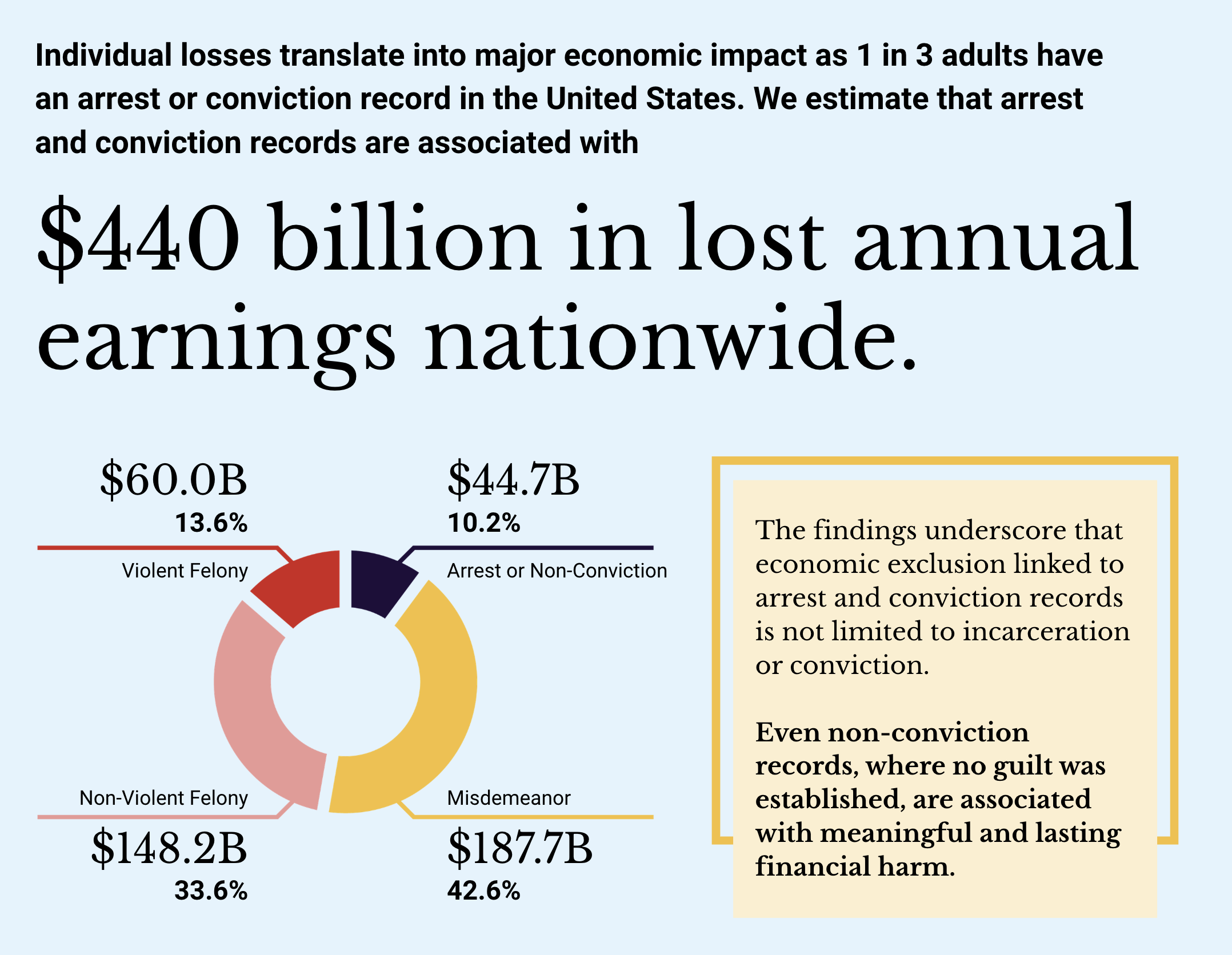
New research from The Clean Slate Initiative finds that people with records experience lower employment rates, work fewer weeks, and earn less than similar people without records. Across the 70 - 100 million adults in America with arrest or conviction records, these disparities amount to an estimated $440 billion in lost earnings each year.
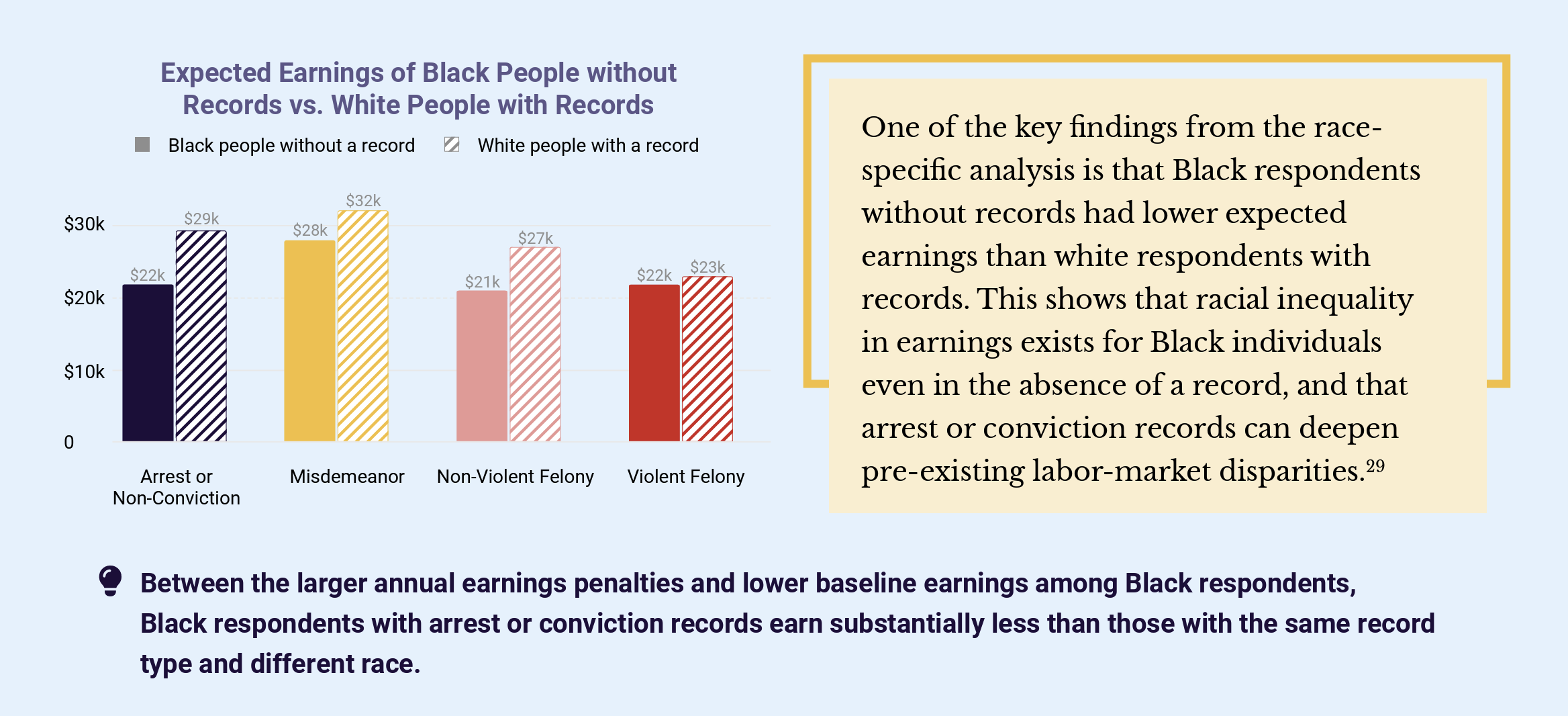
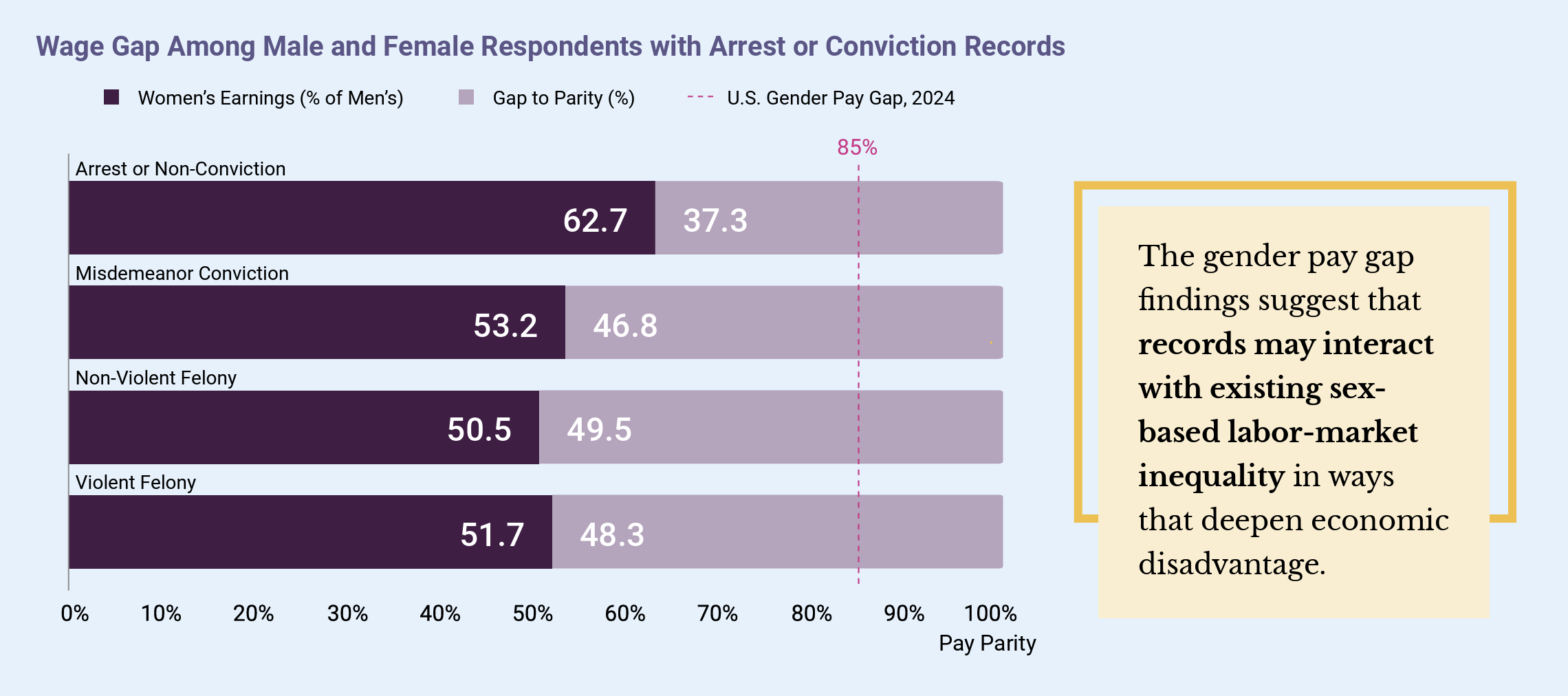
The consequences extend beyond individual paychecks, affecting family stability, workforce participation, consumer spending, and long-term economic growth. They also compound existing inequities, falling especially heavily on Black people and women.
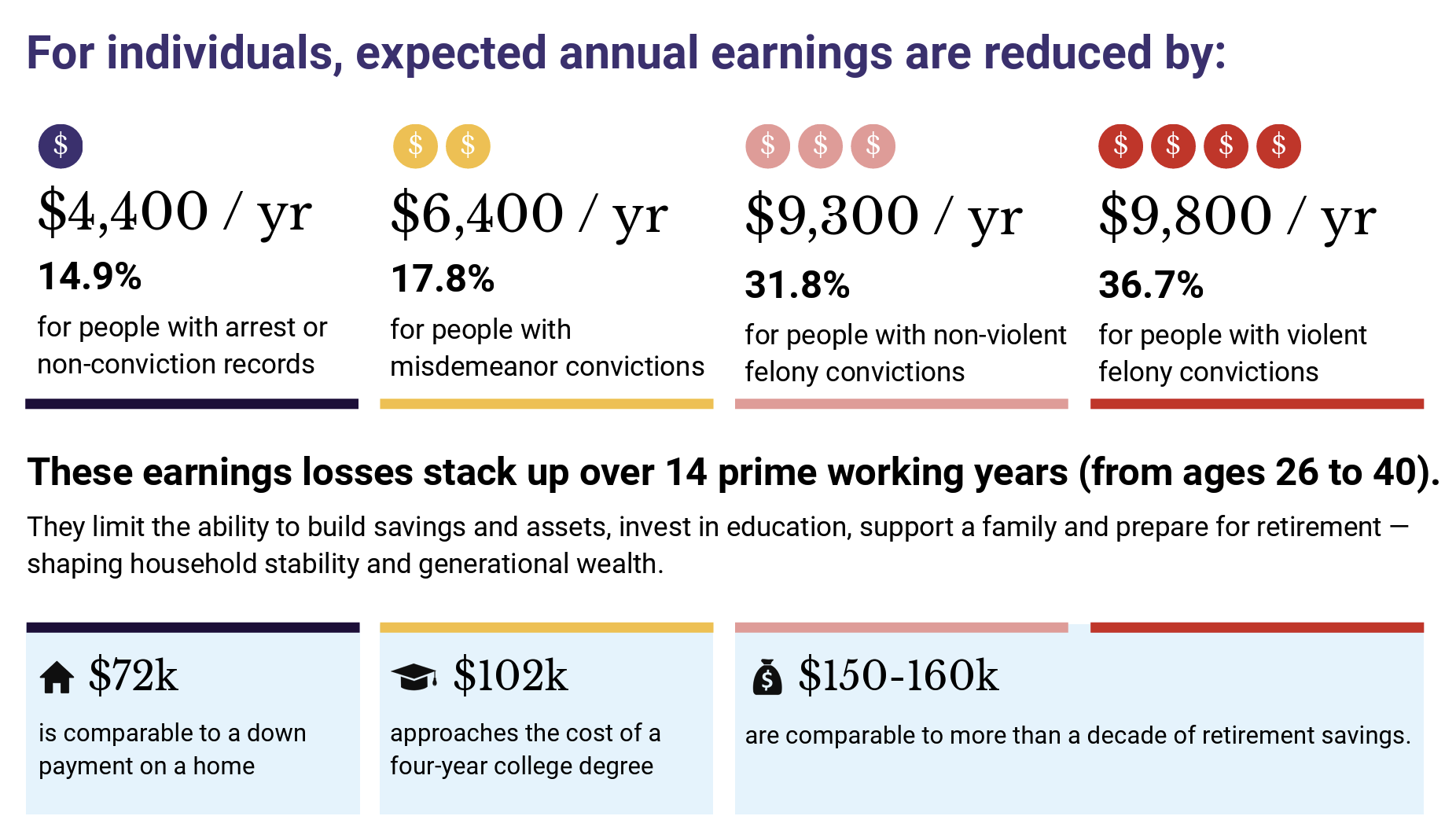
And those losses keep adding up beyond those prime working years, too.
Clean Slate policies offer a practical way to reduce these barriers by sealing eligible records through an automated process after legal requirements and waiting periods are met. Although record sealing cannot reverse every consequence of legal system involvement or structural discrimination, it can help people move forward with greater access to employment, housing, education, and other opportunities.
Read the full report to explore the findings, the economic impacts, and how comprehensive Clean Slate policies can help strengthen families, communities, and the nation’s workforce.
