
Federal Clean Slate: Myth vs. Reality


For millions of people with past arrest or conviction records, the consequences of a record can last long after they have completed their sentences. Background checks can continue to create barriers to employment, housing, education, and other opportunities, making it difficult for people to move forward.
While states across the country have made significant progress in expanding access to automated record sealing, there is currently no standard process for sealing federal arrest or conviction records.
The bipartisan Clean Slate Act and Fresh Start Act aim to address this gap by expanding access to record sealing and supporting state efforts to improve their record systems.
But what would these federal policies actually do, who would benefit, and what limitations would remain?
We're breaking down six common myths about federal Clean Slate legislation to help separate misconceptions from reality.
Myth #1: People can already seal their federal arrest or conviction records.
Reality: There is currently no standard process for sealing federal records.
Unlike states that have adopted Clean Slate laws, the federal government does not have a consistent process for sealing eligible arrest or conviction records.
There are limited exceptions, such as when an arrest or conviction was determined to be invalid or resulted from a clerical error. However, these circumstances are rare.
For most people with federal records, this means an arrest or conviction can continue to appear on background checks, creating barriers to jobs, housing, education, and other opportunities.
The proposed Clean Slate Act would help change this by establishing a standard federal process for sealing certain eligible records.
Myth #2: Receiving a federal pardon means your record is sealed.
Reality: A federal pardon and record sealing serve different purposes.
A federal pardon represents forgiveness for a federal offense, but it does not seal or remove the underlying record.
Even after receiving a pardon, an individual's federal conviction record can remain accessible and may still appear on background checks.
Record sealing, on the other hand, limits public access to a record, helping reduce the barriers people may face when applying for employment, housing, or education.
This distinction is one reason federal Clean Slate legislation is important. While pardons can provide relief, record sealing offers a different way to help people move forward.
Myth #3: The Clean Slate Act would seal every federal arrest or conviction record.
Reality: The Clean Slate Act has specific eligibility requirements and limitations.
The proposed Clean Slate Act would expand access to automated record sealing for certain eligible federal arrest and conviction records.
Under the legislation, qualifying records would include certain federal simple-possession and marijuana-related offenses once an individual meets the requirements. It would also provide automated sealing for eligible federal arrest records when someone was acquitted, exonerated, or never charged.
The legislation also includes clear limitations.
The Clean Slate Act would not allow record sealing for sex offenses, terrorism, treason, or other national security-related offenses. People convicted of other violent crimes would also be excluded under the bill's eligibility restrictions.
Clean Slate policies establish eligibility requirements while expanding access to record sealing for people who qualify.
Myth #4: Everyone would have to go through a lengthy court process to benefit from the Clean Slate Act.
Reality: The proposed legislation would establish automated record sealing for certain eligible records, while preserving a petition process for others.
Traditional petition-based record sealing processes can require individuals to navigate complicated paperwork, court proceedings, and other administrative requirements.
The Clean Slate Act would help reduce these barriers by establishing automated sealing for certain eligible federal records once the necessary conditions are met.
For other nonviolent federal offenses that do not qualify for automated sealing, the legislation would create a process allowing individuals to petition federal courts to have their records sealed.
This approach would expand access to relief while maintaining a pathway for people whose records require individual review.
Myth #5: The Clean Slate Act and the Fresh Start Act do the same thing.
Reality: Both bills support second chances, but they address different challenges.
The Clean Slate Act (S. 1580 and H.R. 3114) focuses on establishing a federal record-sealing process. It would provide automated sealing for certain eligible federal records and a petition process for other qualifying nonviolent offenses.
The Fresh Start Act (S. 2590 and H.R. 3111) focuses on helping states improve their existing record-sealing systems.
Under the Fresh Start Act, states with record-sealing or expungement laws could apply for federal grants to modernize the systems needed to identify and seal eligible records.
The legislation would also require states receiving funding to report record-sealing data by race, ethnicity, and gender, while preserving access to cleared records for courts and law enforcement.
Together, these proposals would address two important needs: expanding federal record-sealing opportunities and helping states implement their own record-sealing laws more effectively.
Myth #6: Federal Clean Slate legislation is a partisan issue.
Reality: Federal Clean Slate legislation has bipartisan support.
Expanding access to second chances has brought together lawmakers from across the political spectrum.
In the 119th Congress, the Clean Slate Act was introduced in the Senate by Sens. Lisa Blunt Rochester (D-DE) and Rand Paul (R-KY), and in the House by Reps. Lucy McBath (D-GA) and Nathan Moran (R-TX).
The Fresh Start Act has also received support from lawmakers in both political parties.
This bipartisan support reflects a shared understanding that people who have met the law's requirements deserve a fair opportunity to work, pursue an education, find stable housing, and contribute to their communities.
Moving Federal Clean Slate Forward
States have demonstrated that expanding access to automated record sealing is possible. Now, federal legislation presents an opportunity to build on that progress.
The Clean Slate Act and Fresh Start Act would help address long standing barriers to opportunity by establishing a pathway for eligible federal records to be sealed and supporting states in strengthening their record-sealing systems. To learn more about federal record sealing, eligibility requirements, and the proposed legislation, visit our Federal Clean Slate resource page.
At The Clean Slate Initiative, we believe that people should not be defined by their past arrest or conviction records. When individuals have met the requirements of the law, they deserve a fair chance to move forward.
States have led the way on second chances. Now it's time for Congress to do its part.
You can help advance federal Clean Slate legislation by contacting your members of Congress and encouraging them to support the bipartisan Clean Slate Act and Fresh Start Act.
Why CSI Supports Federal Policies That Strengthen Second Chances
Automated record sealing can help remove barriers to opportunity, but people with past arrest or conviction records often face additional challenges. CSI Federal Affairs Director Reginald Darby explores why The Clean Slate Initiative supports the Workforce Reentry Act, continued Second Chance Act funding, and the Safer Supervision Act, and how these federal policies complement Clean Slate efforts.

Reflections from NOBLE’s 50th Annual Training Conference
Our Federal Legislative Director, Reginald Darby, shares his reflections on leadership, partnership, and public safety from a week of learning and connection at NOBLE's 50th Annual Training Conference.
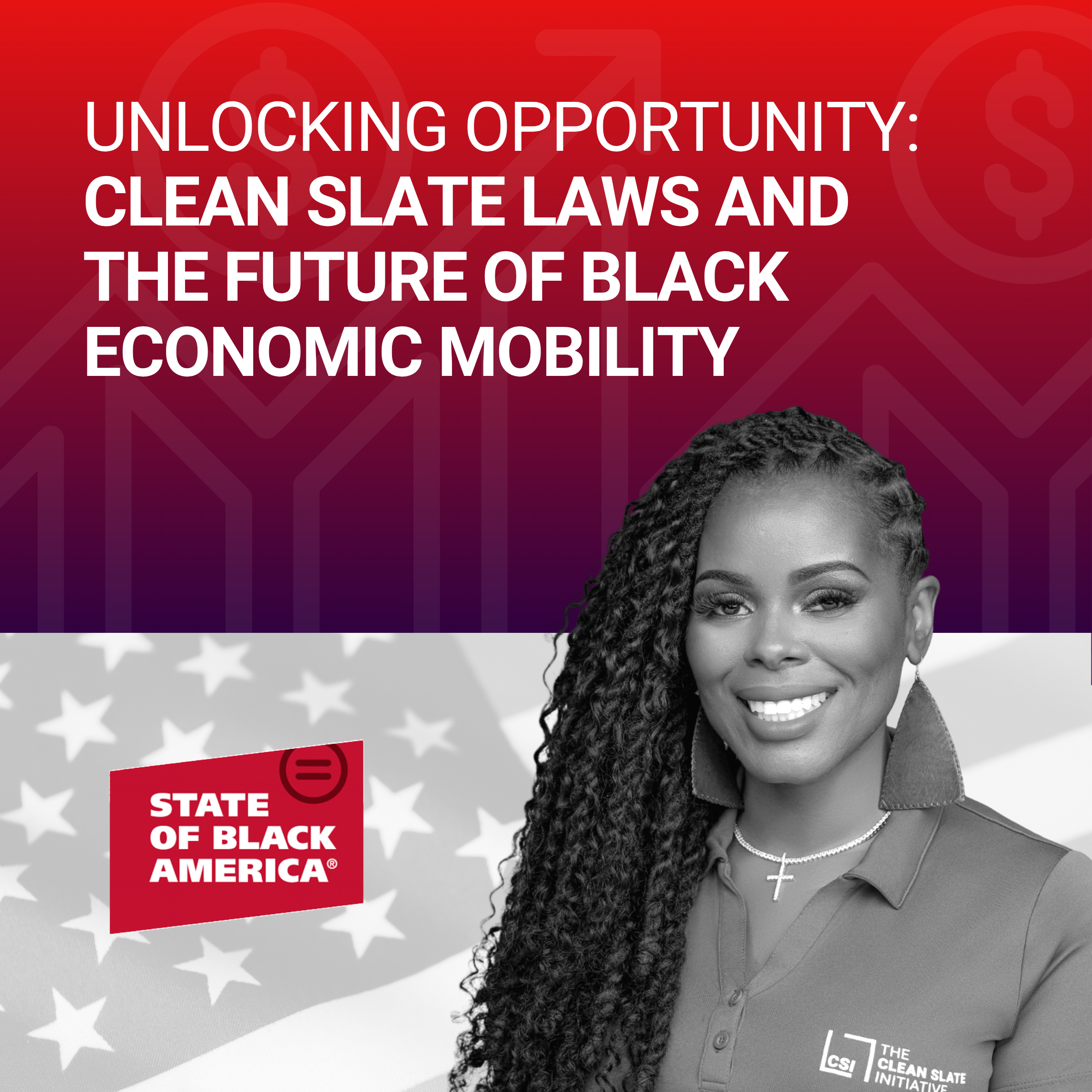
Unlocking Opportunity: Clean Slate Laws and the Future of Black Economic Mobility
Originally published in the 2026 State of Black America®, this essay by our CEO explores how arrest and conviction records limit economic opportunity for Black Americans—and how Clean Slate can help expand access to second chances.
Federal Clean Slate: Myth vs. Reality
While states across the country have made significant progress in expanding access to automated record sealing, there is currently no standard process for sealing federal arrest or conviction records. In this article, our Federal Affairs Director breaks down six common myths about federal Clean Slate legislation to help separate misconceptions from reality.

Clean Slate Hawaiʻi Launches Campaign to Advance Record-Shielding Legislation in 2027
Clean Slate Hawaiʻi has launched a campaign to advance record-shielding legislation in 2027. With approximately 315,000 Hawaiʻi residents impacted by arrest or conviction records, the coalition is advocating for expanded eligibility and a government-initiated record-shielding process to reduce barriers to employment, housing, and education. Learn how Directly Impacted leaders and community partners are working to expand access to second chances across Hawaiʻi.
Why CSI Supports Federal Policies That Strengthen Second Chances
Automated record sealing can help remove barriers to opportunity, but people with past arrest or conviction records often face additional challenges. CSI Federal Affairs Director Reginald Darby explores why The Clean Slate Initiative supports the Workforce Reentry Act, continued Second Chance Act funding, and the Safer Supervision Act, and how these federal policies complement Clean Slate efforts.
