
CSI’s Staff Guide for Tabling at Events

Before Your Event
Before you get to the table, here are some helpful things to do in preparation for the event:
A 6-Step Guide for Conversations
You don't need to give everyone a full explanation of Clean Slate. Start with a conversation, find out what they're interested in, and go from there.
Initiate with a Warm Welcome
Be friendly, smile, make eye contact, and invite people to engage. A welcoming approach starts things on the right note.
Make a Personal Connection
Begin with a simple question about them to get them talking and open up opportunities for connection. Some examples for opening questions:
- Where are you from?
- What do you do for work?
- What brought you to today's event?
Prompt with Open-Ended Questions
Ask open-ended questions and listen closely for clues that connect to CSI’s work, creating a bridge between their interests and our mission. Some examples of open-ended questions:
- Are you familiar with Clean Slate?
- Have you heard about record sealing in your state?
- fDo you know anyone with an arrest or conviction record?
Align and Build on Shared Interests
Use what they’ve shared to discuss how CSI’s work aligns with their values or concerns, sparking meaningful engagement.
If You Don’t Know, Say So
If you don't know the answer to a question, don't guess. It's completely fine to say, "I'll make sure you get that answer," or something similar, and then capture their contact information and make a note to follow up.
Call to Action
Offer a way to make an impact right at the table, whether by signing a petition, completing a survey, joining our email list, or engaging in another activity at the table.
Thank and Confirm Next Steps
Express gratitude for their interest, confirm any next steps, and let them know how they’ll stay connected with CSI.
Words, Phrasing, and Messaging Nuances That Matter
For individuals who have navigated the complexities of an arrest or conviction record, the weight of language can be particularly profound. Labeling someone solely as a "felon," "convict," or "offender" risks reducing them to a single moment in their past, overlooking their individuality, and neglecting their potential for growth and contribution.
The chart below offers suggestions on how to use people-first language when talking about the issue of automated record sealing.
Instead of:
Please Use:
There are also some nuances around particular words and phrases that are important to consider when talking to audiences who are less familiar with Clean Slate or The Clean Slate Initiative.
The chart below covers some of those suggestions, and more information on this is available in our Narrative Research Messaging Toolkit.
Try to Avoid:
Consider:
About The Clean Slate Initiative
The Clean Slate Initiative (CSI) is a national, bipartisan nonprofit organization that works to pass and implement automated record sealing legislation at the state and federal levels.
We aim to ensure people are no longer defined by their lower-level arrest and conviction records, and have the opportunity to contribute to their communities and build a better life.
CSI aims to increase access to record sealing in America.
In each state, we work with bipartisan stakeholders and offer our expertise on what works: smart policy design, an eye toward implementation from day one, and campaign strategy that centers lived experience.
Along the way, we work to redefine the narrative around people with records, cutting through the bias and stigma to create lasting change.
About Clean Slate
Arrest and Conviction Records Create Barriers
94 percent of employers use background checks to screen out applicants with records
90 percent of landlords use background checks to screen out applicants with records
72 percent of colleges and universities use background checks to screen out applicants with records
The Problem: People with Records Don’t Get a Fair Shot
One in three people in America has an arrest or conviction record. Yet even after serving their time and paying their debt to society, many are denied a true second chance, facing significant barriers to education, housing, and employment. While each state has a way to seal eligible records through a petition process, it is often complex and costly to do so – deterring millions of people eligible under current expungement laws from pursuing this process.
These challenges extend beyond individuals, creating a ripple effect that impacts families, weakens communities, and hinders economic growth.
The Solution: Clean Slate Policies Streamlines the Process
The problem is vast, but the solution is simple.
Clean Slate is a bipartisan policy that cuts red tape and streamlines the record-sealing process using automation technology with human oversight — because bureaucracy should not stop people from earning a second chance after making a mistake.
Clean Slate Wins Through the Years

2018: PA
Pennsylvania passes the country's first Clean Slate policy, sparking a movement.

2019: UT & NJ
Two more states pass Clean Slate policies: Utah & New Jersey.

2020: CT & MI
Two more states pass Clean Slate policies: Michigan & Connecticut.

2021: DE + VA
Two more states pass Clean Slate policies: Delaware & Virginia.

2022: CA + OK + CO + DC
Three more states, and Washington D.C., pass Clean Slate policies: Oklahoma, Colorado, & California.
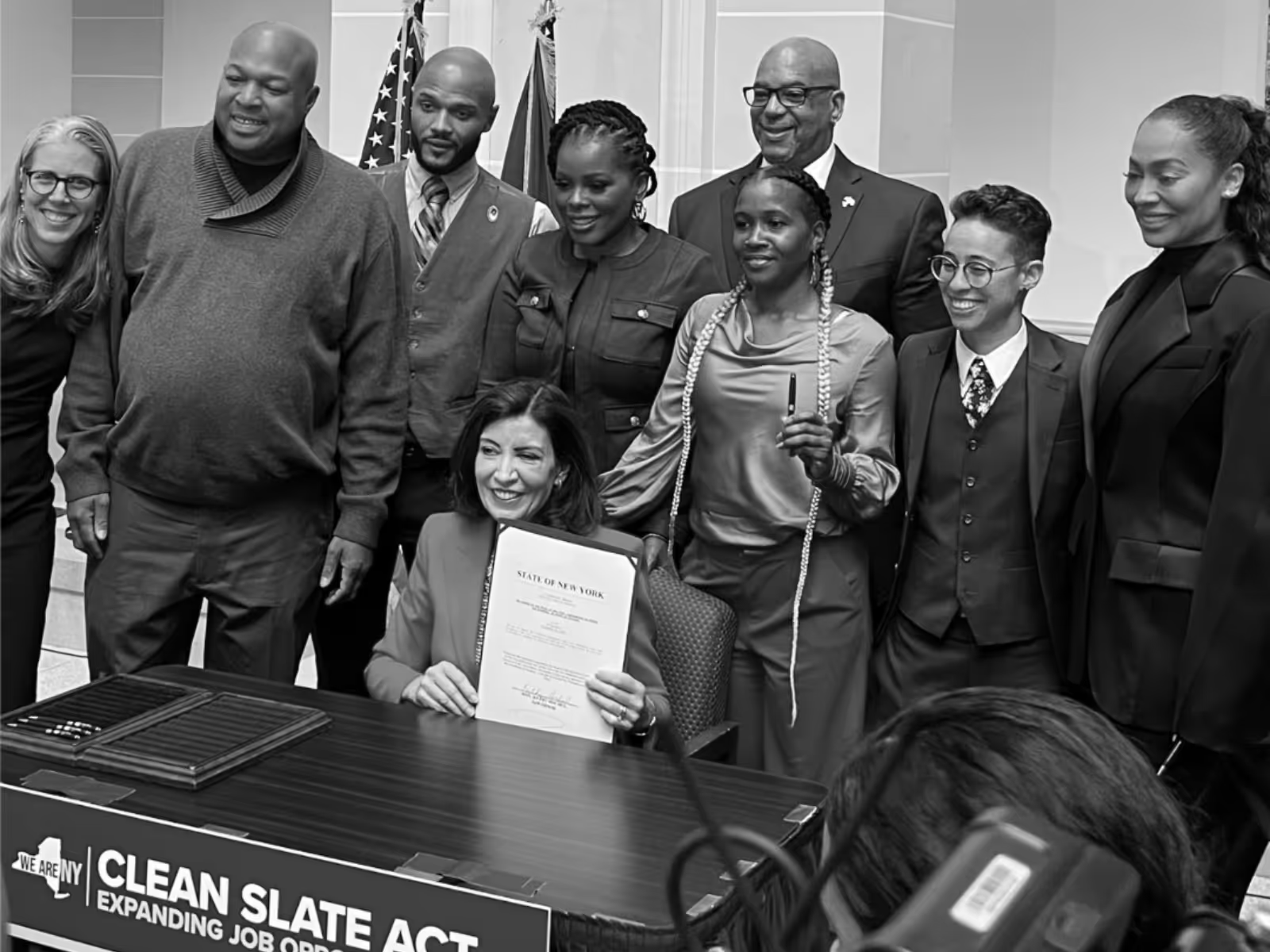
2023: MN + NY
Two more states pass Clean Slate policies: Minnesota & New York.

2025: IL
Illinois becomes the 13th state to pass a Clean Slate policy.

2026: MO
Missouri passes Clean Slate policy and wins the Race to 14.
Why is CSI Putting a Focus on the South?
The South is home to some of the highest rates of people living with a record in the country. CSI's Southern Strategy focuses on advancing automated record sealing policies, strengthening state coalitions, and supporting advocacy where the need — and opportunity for impact — is greatest.
Our Focus States
Key Messages About Our Southern Strategy
Ways to Get Involved / Take Action
Have someone interested in further connecting with our work? Point them to one of these resources.
FAQs
What is The Clean Slate Initiative?
The Clean Slate Initiative (CSI) is a national, bipartisan nonprofit organization that works to pass and implement automated record sealing legislation at the state and federal levels.
We aim to ensure people are no longer defined by their lower-level arrest and conviction records, and have the opportunity to contribute to their communities and build a better life.
What states have passed Clean Slate so far?
- California
- Colorado
- Connecticut
- Delaware
- Illinois
- Michigan
- Minnesota
- Missouri
- New Jersey
- New York
- Oklahoma
- Pennsylvania
- Utah
- Virginia
- Washington D.C.
What types of records are eligible for sealing under Clean Slate laws?
CSI has a set of minimum policy standards for Clean Slate laws. The criteria offer states the flexibility to work within their existing standards while exploring ways to expand eligibility.
CSI policy minimums include:
- Automation of record clearance;
- Automatic clearance upon eligibility of the record (noting that eligibility varies from state to state);
- Inclusion of arrest records;
- Inclusion of misdemeanor records; and,
- A strong recommendation for laws to include eligibility of at least one felony record.
How do Clean Slate laws work?
Successful automated record sealing has three main components:
1: Automated Sealing: Eligible records are sealed through automated, government-initiated processes.
2: Barrier Removal: Sealed records no longer appear on background checks, opening opportunity to access jobs, housing and education.
3: Notification & Awareness: Directly impacted people know their records are sealed and what that means for their lives.
Which states are already actively sealing records through an automated system?
- California
- Colorado
- Connecticut
- Delaware
- Michigan
- Minnesota
- Pennsylvania
- Utah
- Virginia
How is record sealing different from expungement?
Record Sealing: Sealing a record means that it is not available for public view, but it still exists in the eyes of the law. Certain individuals, like law enforcement or government agencies, may still have access to sealed records in some situations. Additionally, impacted individuals can access their own sealed records by court order or request.
Expungement: Expungement is a legal process that allows for the removal of certain non-convictions and convictions from a person's record. After expungement, in most cases, it's as if the conviction never happened. The record is typically sealed from public view or deleted and can only be accessed in limited circumstances.
How can I get involved?
Point the person to the “Ways to Get Involved / Take Action” section.


Support Clean Slate
Your voice and action matter. Share your story to amplify the importance of second chances, or make a donation to help expand access to automated record sealing and opportunity for millions.
